Free shipping on every order of ฿299 or more Shop now


As health and beauty care moves from chemicals to the power of nature, “castor oil” has become hugely popular for its benefits for hair and skin, and even for eyelashes and eyebrows. But with so many products on the market, buying a good, high-quality oil that is worth the money is not easy. If you have ever bought one that smelled rancid, did not work as you hoped, or found the terms on the label confusing, this guide takes you through every aspect like an expert, so you can choose castor oil with confidence and safety and get the clearest results
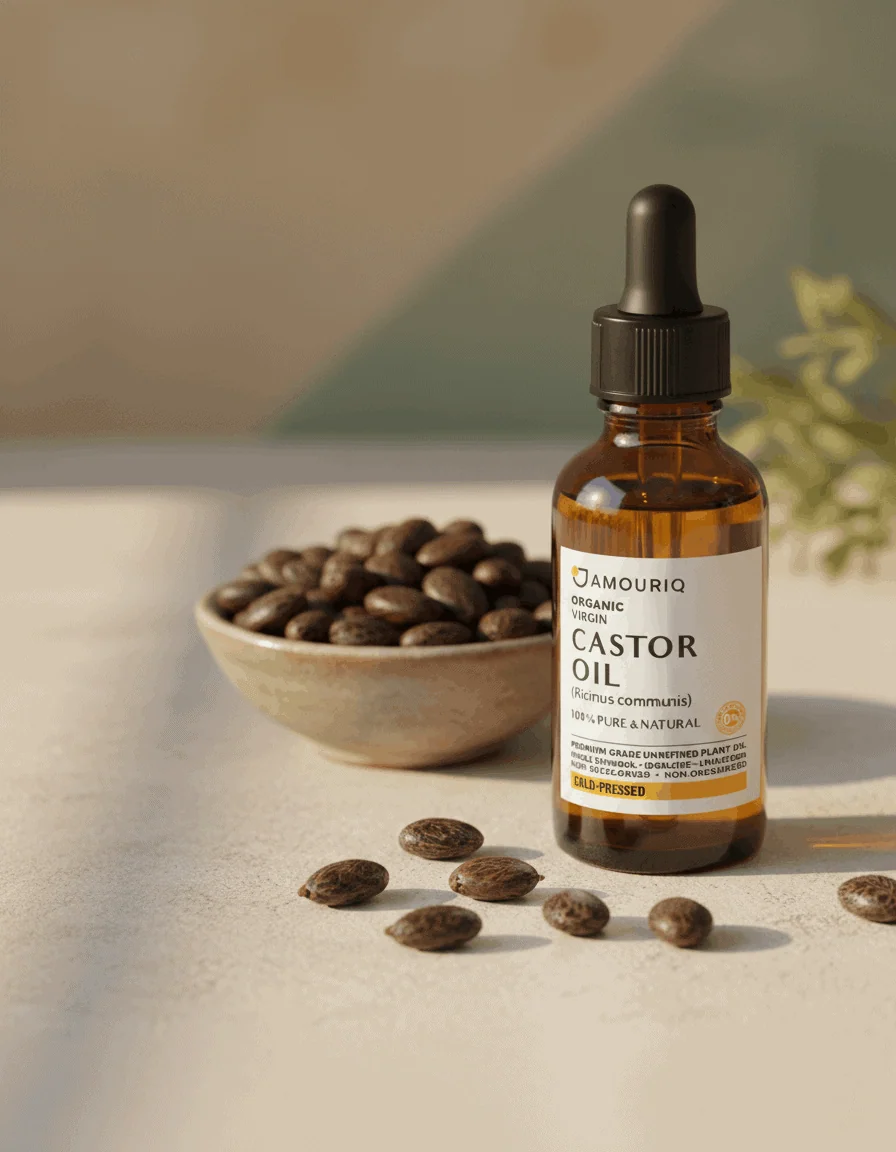
Understanding “cold-pressed castor oil”: the key to real effectiveness
When buying castor oil, the first thing to look for is not the lowest price but the production method called “cold pressed”, which decides the quality and nutrients your skin and hair will get
How is cold pressed different from hot pressed?
The extraction method has a big effect on the oil’s chemical structure. Hot extraction exposes the oil to high heat, which destroys vitamins and key fatty acids, while cold pressing keeps its full value
- Process: Mechanical pressing at a low temperature, no higher than 45–50 °C
- Keeping its value: Keeps almost 100% of the “ricinoleic acid”, a fatty acid unique to castor oil with antibacterial and anti-inflammatory properties
- Colour and feel: Cold-pressed oil is clear pale yellow, with its characteristic thickness and a light natural nutty scent
Comparison: cold-pressed vs hot-pressed vs chemically extracted castor oil
| Feature | Cold pressed (Cold Pressed) | Hot pressed (Expeller Pressed) | Solvent extracted (Hexane) |
| Nutrients and vitamins | Very high, kept intact | Medium (some lost) | Low (destroyed by heat / chemicals) |
| Purity | 100% pure | Small chance of contamination | May contain chemical residues |
| Scent | Natural scent (nutty / plant) | Faint or burnt scent | No scent or a chemical scent |
| Long-term value | Highest (a little goes a long way) | Medium | Low (may irritate skin) |
How to read a castor oil label like a pro: which words are “real” and which are “marketing”
Reading the labels of natural products takes care, because the words on the front of the bottle sometimes don’t tell the whole story. Checking the back of the bottle and its symbols helps you pick products with E-EAT quality (Expertise, Authoritativeness, Trustworthiness)
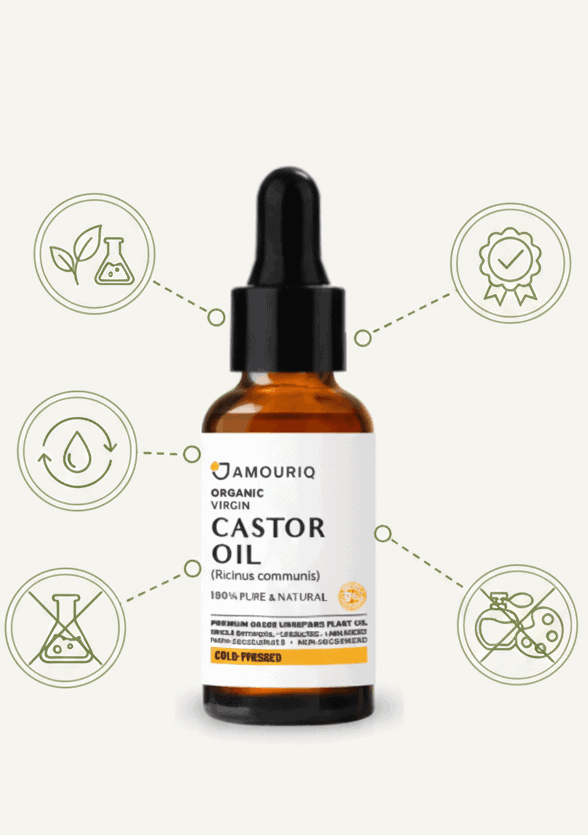
Checklist: 5 key points on a castor oil label
- Botanical name (Botanical Name): It must clearly state Ricinus communis to confirm it is real castor oil
- Ingredients (Ingredients): There should be only one item: 100% Cold Pressed Castor Oil or Ricinus communis Seed Oil, with no cheaper oils mixed in (No Fillers)
- Hexane-free (Hexane-Free): Hexane is a chemical used to extract more oil, but it is harmful to skin. A good product states that it is not used
- Organic certification (Organic Certification): Look for marks such as USDA Organic or IFOAM, which certify that the raw material is grown without pesticides
- Free from synthetic fragrance and colour: Good castor oil should not have added scent or colour, to lower the risk of allergy for people with sensitive skin
Frequently asked questions (Q&A) about buying
Q: Is dark or black castor oil (Black Castor Oil) better than yellow?
A: Black castor oil, or Jamaican black castor oil (JBCO), is made by roasting the seeds before extraction, so it is more alkaline and contains ash. It suits stimulating a healthy scalp, but for the face or sensitive skin, clear yellow cold-pressed castor oil is gentler and absorbs better
Q: Does a 100% natural oil need a Thai FDA number?
A: Under Thai law, a pure raw oil that is not made into a finished cosmetic may not need to be notified to the Thai FDA as a cosmetic. Instead, a shop that gives clear information on the source and a certificate of analysis (COA) shows its reliability
Storage tips: how to keep castor oil fresh and stop it going rancid
All natural oils can oxidise (Oxidation) when exposed to air, sunlight and heat, which makes the oil “rancid” and less effective
4 enemies of castor oil
- Sunlight (UV): Light speeds up the breakdown of fatty acids. Only buy oil packed in an “amber glass bottle” (Amber Glass Bottle)
- Heat: Avoid leaving it in a hot, humid bathroom or near a window
- Air: Oxygen is the main cause of rancidity. Close the cap tightly right after use
- Moisture: If water gets into the bottle, mould or bacteria may build up
How to store it correctly (Step-by-Step)
- Choose dark packaging: If the oil you bought is in a clear bottle, consider moving it to an amber glass bottle
- Keep it somewhere dark and cool: A cupboard at normal room temperature (25–30 °C), out of direct sunlight, is the best place
- No need to refrigerate: Castor oil is very thick, and chilling it makes it too thick to use easily. If the weather is very hot you can chill it, but leave it at room temperature before use
- Use a measuring aid: If possible, use a dropper instead of pouring directly, to reduce contact with air and dirt around the bottle neck
Benefits and uses of castor oil to make every drop count (from head to toe)
To get the most from your organic castor oil, learn to use it in many ways recommended by natural therapy experts
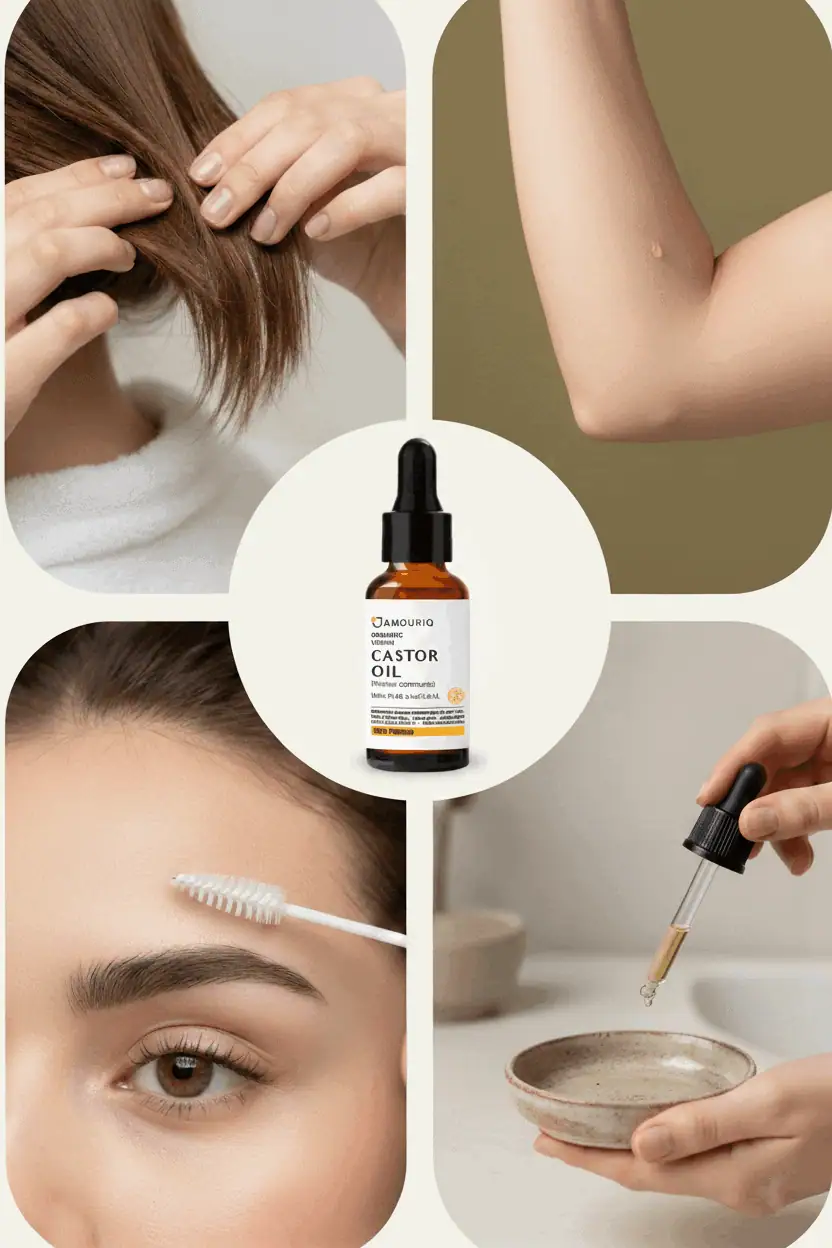
Uses that really work
- Eyelashes and eyebrows: Use a clean mascara brush to apply a little castor oil before bed, regularly, to help lashes and brows look fuller, darker and stronger
- Hair mask for thinning hair: Mix castor oil with coconut oil 1:1 (castor oil is very thick), massage into the scalp, leave for 30 minutes, then wash out
- Cracked heels: Apply castor oil to your heels and put on socks before bed. Your skin will soon feel smoother and softer
- Face cleansing (Oil Cleansing Method): Mix it with a facial massage oil to draw dirt out of pores and reduce clogged-pore acne
Trusted references (Scientific Insights)
Research published in Journal of Cosmetic Science shows that the ricinoleic acid in castor oil penetrates deep through the layers of the skin (Deep Penetration) better than many other plant oils, which makes it an excellent “carrier” for bringing nutrients into skin cells
Cautions and who should not use it
Even though it is 100% natural, safe use following E-EAT principles matters:
- Allergy test (Patch Test): Apply it to the inside of your forearm and wait 24 hours before real use
- Pregnant women: Not recommended for consumption or for massaging the belly, as it can stimulate contractions (consult a doctor)
- Keep it out of your eyes: Although it can be used on eyelashes, its thickness may irritate the eyes if it gets into them directly
Choosing Castor oil or castor oil for the best value is not about quantity alone, but about “the quality of the extract”. A 100% cold-pressed organic oil may cost slightly more than an industrial-grade oil, but the results, both in safety from chemical residues and in how well it nourishes, are completely different. Once you know how to read the label and store it correctly, this bottle will become a trusted beauty companion you can use safely for a long time
References (References):
- International Journal of Toxicology: Final Report on the Safety Assessment of Ricinus Communis (Castor) Seed Oil
- Healthline: 7 Benefits and Uses of Castor Oil
- Journal of Cosmetic Science: Penetration of Ricinoleic Acid in Human Skin
More articles Click here
Browse our Castor Oil 100% premium grade from AMOURIQ here
Castor Oil Organic | Castor Oil Organic 500 ml | Castor Oil Glass Bottle